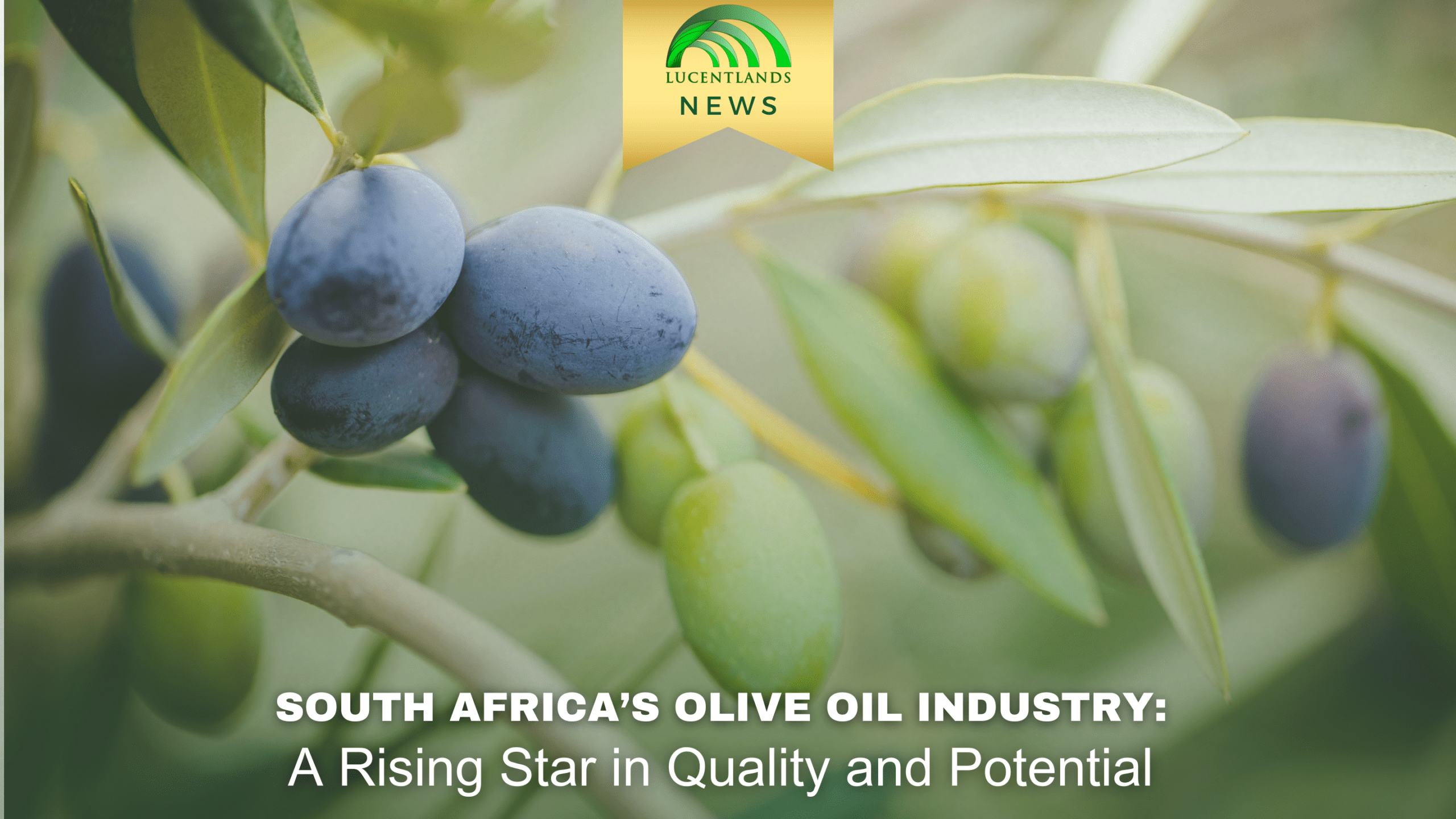

South Africa’s olive oil industry, though relatively young, has emerged as a significant player in the global olive oil market. With olive oil production tripling globally over the last 60 years to meet increasing demand, South African growers have planted olives in the Mediterranean climate in the Western Cape to produce high-quality Extra Virgin Olive Oil (EVOO) and have thus positioned the local industry as a key olive oil producer in Africa. The country now produces between two and three million litres annually yet imports over six million litres to satisfy local demand. This gap highlights both challenges and exciting opportunities for growth in the local industry.
Thriving in a Mediterranean Climate
Spain dominates olive oil production globally, supplying over 50% of the world’s output, while other major producers surround the Mediterranean. In Africa, South Africa’s Western Cape is one of the few regions outside the Mediterranean suited to olive cultivation, enabling the country to produce oils of exceptional quality. Over the past 25 years, local production has surged alongside increasing health awareness and global demand, transforming formerly arid lands into many hectares of thriving olive orchards. The industry’s commitment to excellence is evident, with 95% of South African-produced olive oil certified as Extra Virgin, ensuring high standards and boosting international recognition.

Balancing Imports with Superior Local Quality
Despite its high-quality local EVOO, South Africa still imports significant quantities of olive oil, primarily from Spain, Portugal, and Greece. According to Wendy Petersen, CEO of SA Olive Association, this imported oil often lacks the freshness and purity of local EVOO, as not all imported products are certified extra virgin. “The South African olive oils are of a considerably higher quality than much of the olive oil that we import into the country,” she explains. “This creates an incredible opportunity for the local industry—can you imagine if we could turn this around and make that additional six million litres of local production?”
Economic and Employment Growth Potential
Increasing local production to meet domestic demand could drive substantial economic and employment benefits. By reducing reliance on imported olive oil, South Africa could significantly boost revenue within the industry and create jobs across the agricultural, processing, and retail sectors. “This could have significant consequences for the local olive industry,” Pietersen notes, underscoring the potential for growth across both primary production and processing sectors.

Strategic Opportunities: Olive Tourism and Local Cultivars
Beyond expanding production, South Africa has opportunities to promote “olive oil tourism,” similar to its renowned wine routes, drawing visitors to the Western Cape for farm tours, tastings, and educational experiences. This initiative could generate a new revenue stream, deepen consumer appreciation for local olive oil, and further distinguish South African EVOO as a premium product. Additionally, the development of uniquely South African olive cultivars could create a distinctive market niche, offering a truly local product that enhances South Africa’s global standing.
Overcoming Market Challenges and Building Consumer Awareness
Competition from subsidised imports poses a major challenge to South African producers. The South African Olive Industry Association (SA Olive) is lobbying for policies to support local production, including VAT exemptions on olive oil to encourage wider consumption and fairer competition against cheaper imports. The association is also investing in consumer education to highlight the health benefits of EVOO and to change perceptions that imported oils are inherently superior.
Future Outlook: Innovation, Sustainability, and Growth
It is estimated that new plantings are increasing by 20% annually. At this rate of increasing production, the South African olive oil industry is one of the fastest-growing agricultural sectors in the country. By investing in advanced processing technology, expanding cultivation areas, and fostering emerging farmers, South Africa has the potential to firmly establish its position as a key global player in premium olive oil production. The industry has an uncompromising approach to quality. Combining this with innovation and sustainability holds the potential for great future opportunities in creating a premium product for domestic consumers and enhancing South Africa’s competitiveness within international markets.
Watch the Lucentlands Podcast episode with Wendy Petersen, CEO of SA Olive Association, for more insights:
Find out more about the Lucentlands Media services, here.