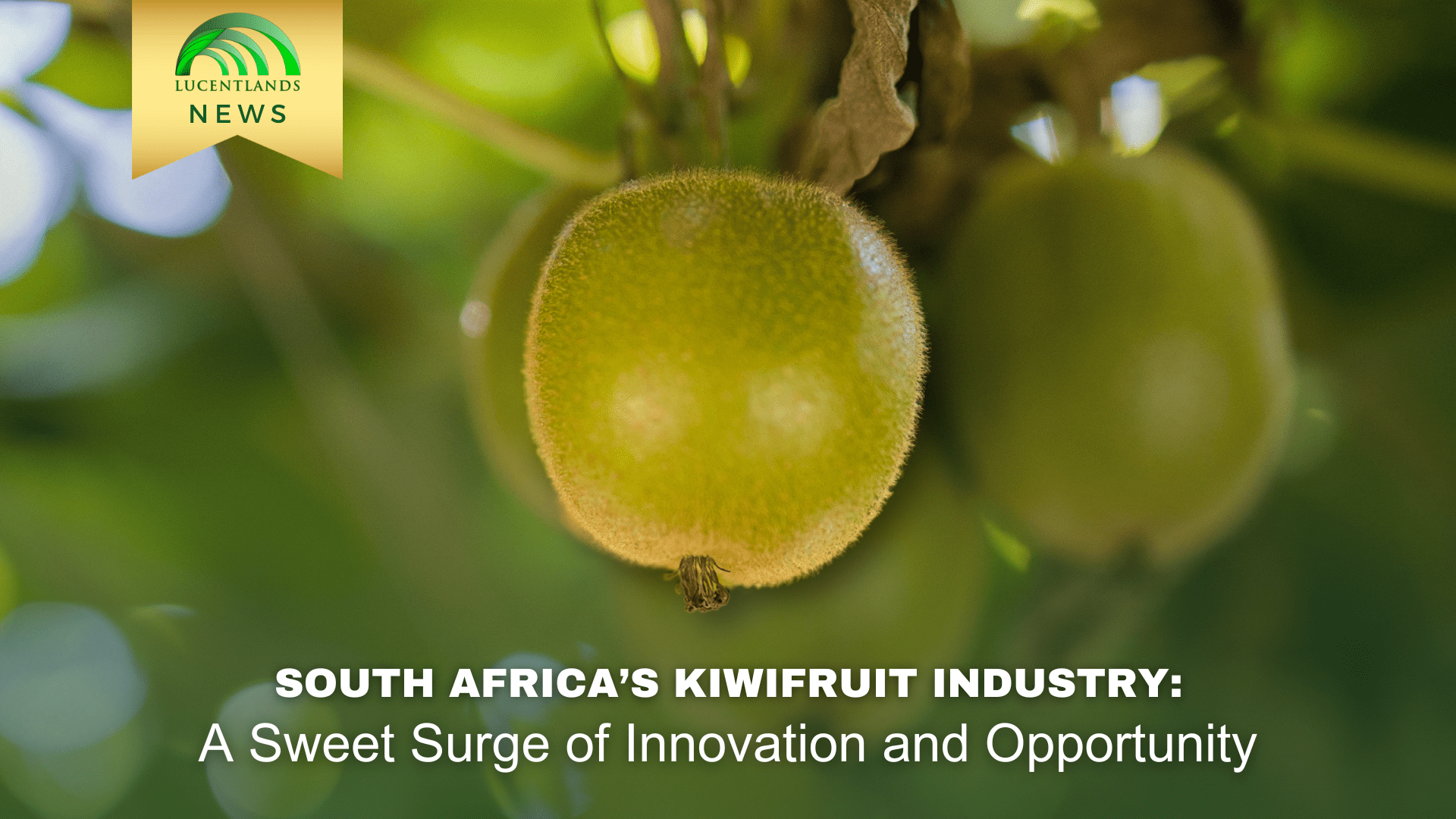
The South African kiwifruit industry is moving from a niche category towards coordinated commercial growth, supported by new genetics and expanding market interest.
South African Kiwifruit Industry Growth and Strategy
South Africa’s kiwifruit industry is experiencing a dynamic transformation or rapid growth. Once a niche crop with limited scope, kiwifruit is now among the most promising emerging categories in the country’s fresh produce landscape. Thanks to cutting-edge genetic material, ambitious growers, and global market demand, especially for golden and red-fleshed varieties, South Africa is fast establishing itself as a Southern Hemisphere supplier of choice.
A Decade of Growth. From Trial Blocks to National Strategy
Although kiwifruit has been grown in South Africa for over 40 years, the last decade has seen an accelerated expansion. South African Kiwi Growers NPC, a national body aimed at coordinating the development of this high-value crop was established in 2019, a significant milestone towards in formal industry establishment. As there are currently fewer than 500 acres planted and the industry has ambitious targets of reaching 1,000 hectares in the next 10 years, the industry’s growth trajectory is expected to be steep over the next decade.
The stimulus driving this this expansion is a range of new generation of cultivars. These include yellow- and red-fleshed kiwis that thrive in South Africa’s warmer regions and command premium prices globally. These newer varieties require fewer chilling hours, produce sweeter fruit, and yield more prolifically than traditional green kiwis.
The Kiwi Connection. A Model of Vertical Integration
One of the prominent stakeholders in this space is The Kiwi Connection (TKC). This company represents a collaboration between Freshworld, the RSA Group, and TopFruit. TKC is entering its eighth commercial season in 2025 and anticipates a 60 percent year-on-year increase in volume, with an expected harvest of around 1,600 tons. Impressively, 90 percent of that projected volume is expected to consist of golden kiwis, with red kiwis making up the rest.
Another significant advantage that South African producers have is that the timing of the South African kiwifruit harvest is between January and April. This timing fills a kiwifruit supply gap in export markets, before the arrival of kiwifruit from New Zealand. This critical supply window allows local producers to access premium retail programmes in Europe, North America, and Asia with minimal competition.
Varieties such as DORI™ (gold), YA50 (red), and promising new ‘Sweet Green’ types offer a diverse and expanding basket to customers. TKC’s innovation pipeline includes trials of red kiwis tailored to different climates, and gold varieties that can achieve Brix levels of 19 to 20, making them some of the sweetest in the world.
Global Footprint. Local Advantage
Geographically, the industry has spread beyond traditional strongholds in KwaZulu-Natal and the Lowveld region of Mpumalanga. New orchards have developed in the Western and Southern Cape, from Ceres and Grabouw to Tsitsikamma and are producing encouraging results thanks to favourable microclimates and access to logistics infrastructure.
To further strengthen their operations, TKC recently invested in a trial farm near Rawsonville in the Western Cape. This site will serve as both a showcase and research centre. It will also help reduce reliance on expensive imported pollen by establishing male blocks for local pollen production, an essential component in artificial pollination. Bees play a limited role in kiwi orchards because the flowers do not offer nectar.
KiwiKo
Another key innovator is KiwiKo, a variety development and management company with global reach, established as a partnership between the South African Variety management company TopFruit and Miko Asia. In 2025, KiwiKo hosted its first-ever Field Day in South Africa. International guests observed the performance of new cultivars under diverse conditions. Their green-fleshed variety Yanoon 3, which has already seen commercial success in Europe, is being trialled locally for its sweet taste, high yields, and ease of production.
Equally notable is KiwiKo’s rootstock YN-RT1, developed to counter global threats to kiwi production such as Kiwi Vine Decline Syndrome and PSA, a bacterial disease that affects kiwis. With tolerance to waterlogging, salinity, and bacterial infection, this rootstock may not only be a game-changer for South Africa but a potential export in its own right.
Market Challenges and Infrastructure Needs
While the future looks bright, kiwi farming is not without its challenges. Establishment costs are steep, averaging R850,000 per hectare, due to trellising, shade netting, and labour requirements. Moreover, successful pollination often depends on hand-pollination using imported pollen, which drives up production costs.
The lack of dedicated infrastructure, such as kiwifruit-specific packhouses and cold chains, poses another hurdle. Industry leaders agree that investment in infrastructure and logistics will be crucial if South Africa is to meet its export potential.
Eye on Market Access
Currently, South African kiwis are exported primarily to Europe, the UK, the Middle East, and Canada. However, unlocking access to high-volume markets like the USA, Japan, and China remains a top priority. The South African Kiwi Growers NPC and export-focused companies are actively pursuing these trade channels through government and industry partnerships.
South Africa’s disease-free plant material also presents a unique competitive advantage. With many kiwi-producing countries battling vine diseases, local growers have an opportunity not only to export fruit, but also to supply clean, certified pollen and plant material to global partners.
Kiwi as a Superfood
Consumer interest in kiwifruit is on the rise, not just for its flavour, but for its health benefits. Rich in Vitamin C, dietary fibre, and antioxidants, kiwi is considered a superfood. Its distinctive appearance and tropical sweetness make it a premium product, especially as global consumers shift toward more holistic and nutrient-dense eating habits.
A Future Built on Knowledge and Collaboration
Despite high barriers to entry, the collaborative spirit within South Africa’s kiwi community is evident. From grower field days and cultivar trials to joint research initiatives and technical advisory, the industry is uniting around shared knowledge and long-term vision.
As Roelof du Toit, Technical Manager for The Kiwi Connection puts it, “We’re still a young industry, and we are building it from the ground up. With our own pollen, strong genetics, and shared commitment. If we do this right, South Africa can lead the way in high-quality golden and red kiwifruit production.”
This article forms part of our coverage of South African kiwifruit industry. Explore more Lucentlands agricultural news or visit South African Kiwi Growers.